Recreational
CHURCHES THROUGHOUT THE UK AND THE WORLD THAT HAVE BEEN CONVERTED INTO RECREATIONAL PURPOSES
St Paul’s Church, Bristol – Circomedia
Type: Recreational
Use: Circus Training Centre + Multifunctional Venue
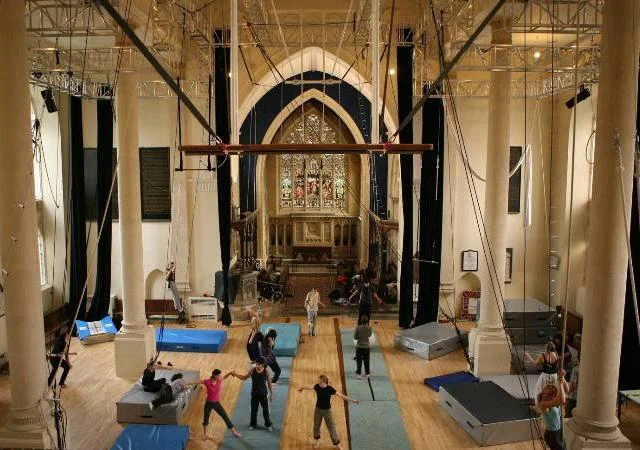
St Paul’s Church in Bristol has been adaptively reused as Circomedia, a performance and training centre for contemporary circus and physical theatre. The conversion retains the church’s soaring nave and architectural character while integrating modern amenities, allowing it to function both as a vibrant recreational venue and a cultural landmark.
Anneliese Brost Music Forum, Bochum
Type: Recreational
Use: Concert Halls
Architects: Bez+Kock Architekten
Photo Credit: Bez+Kock Website
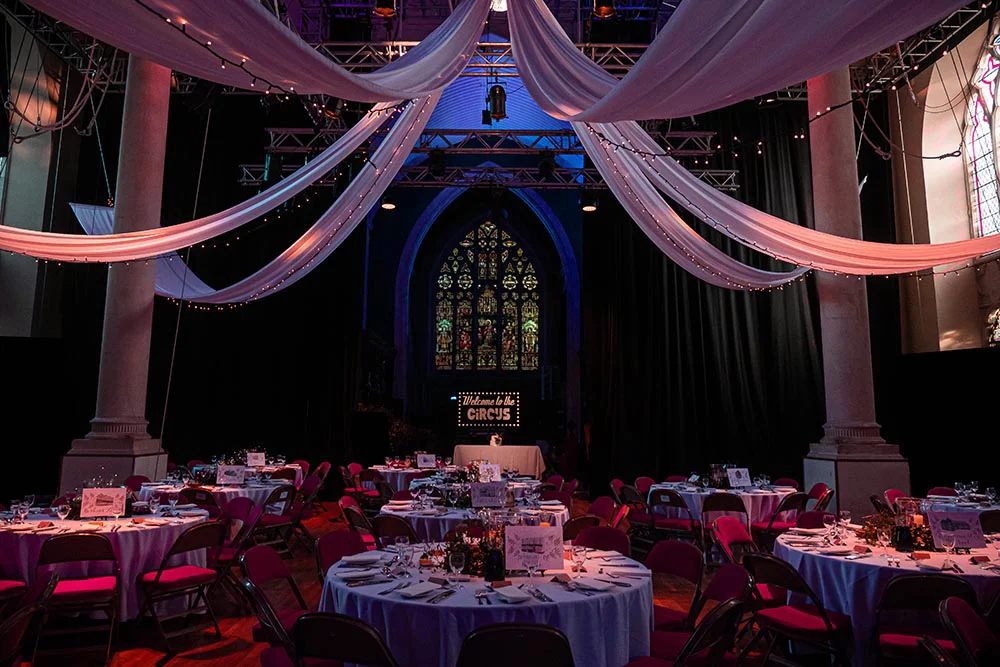
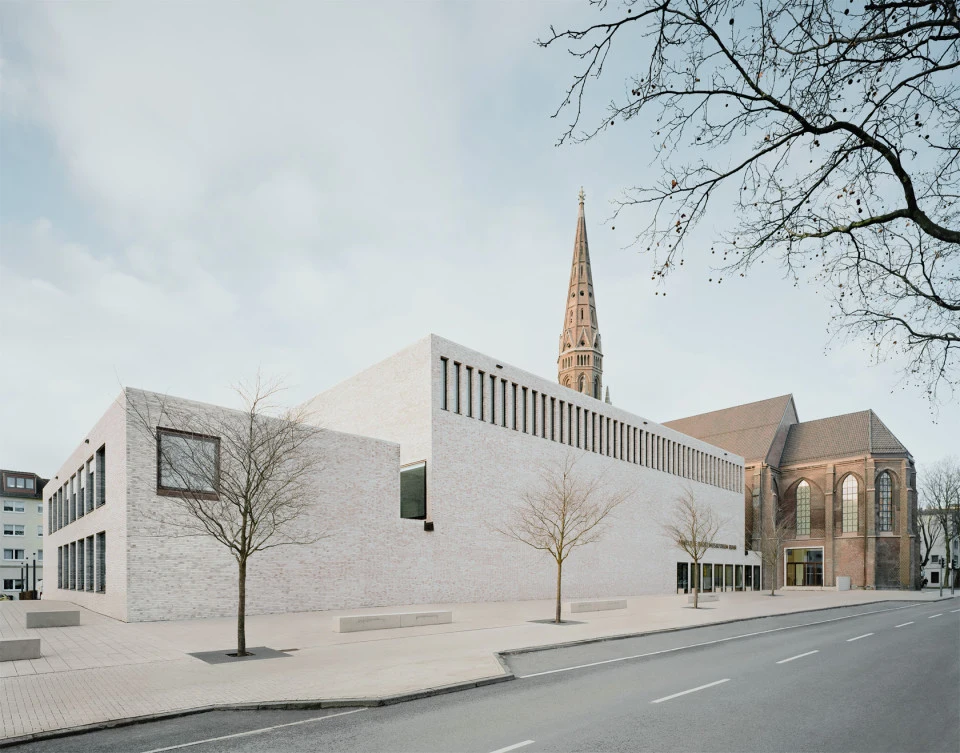
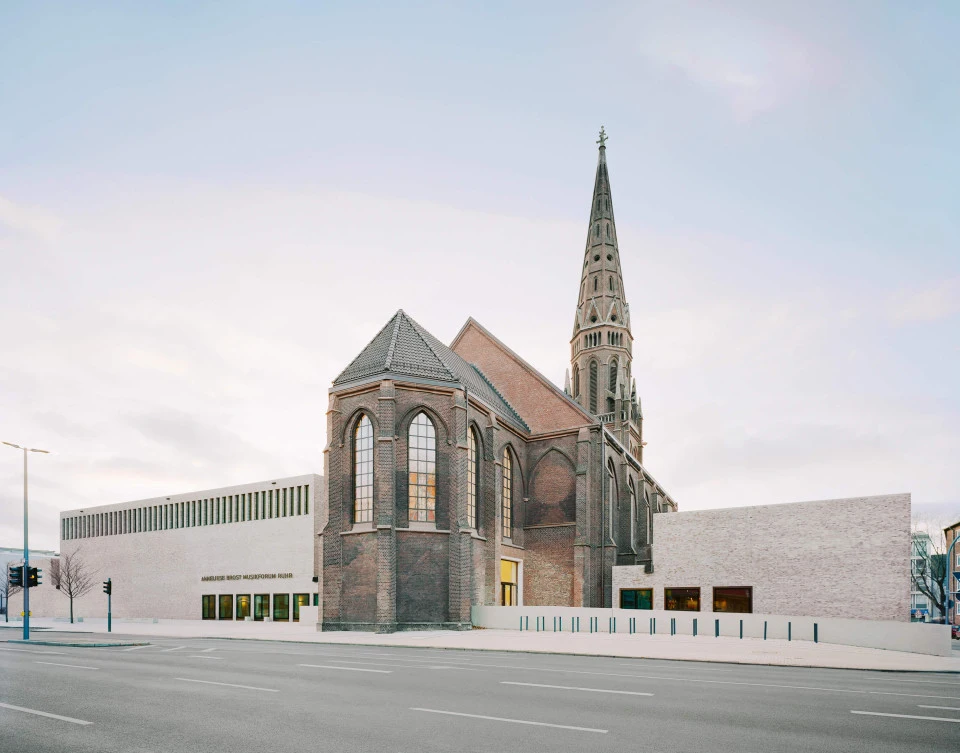
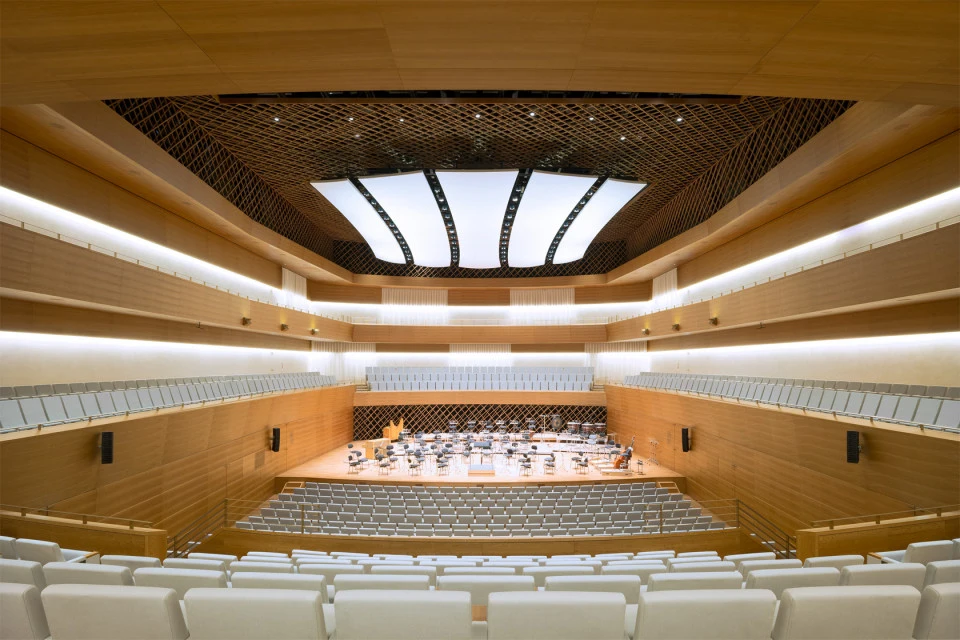
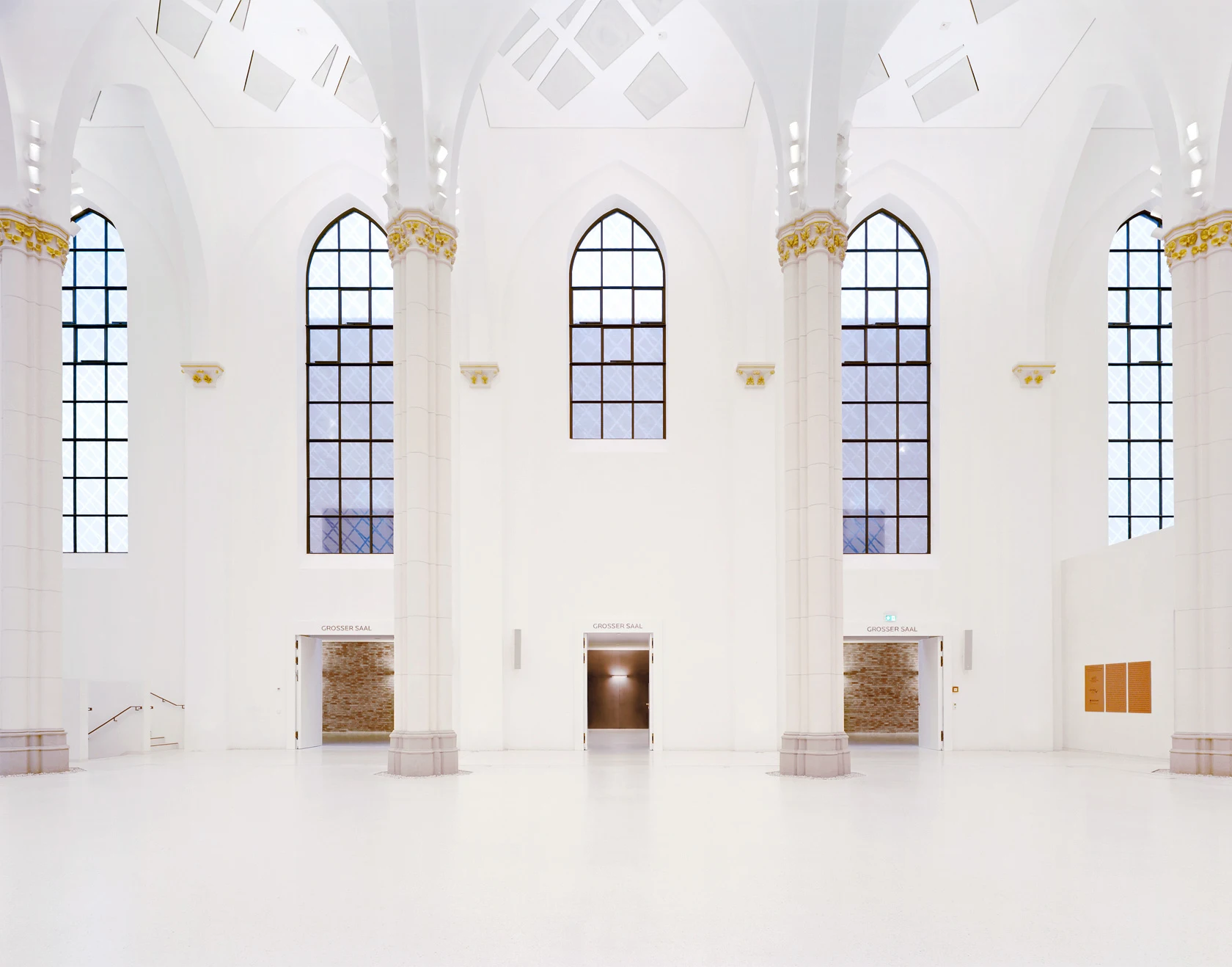
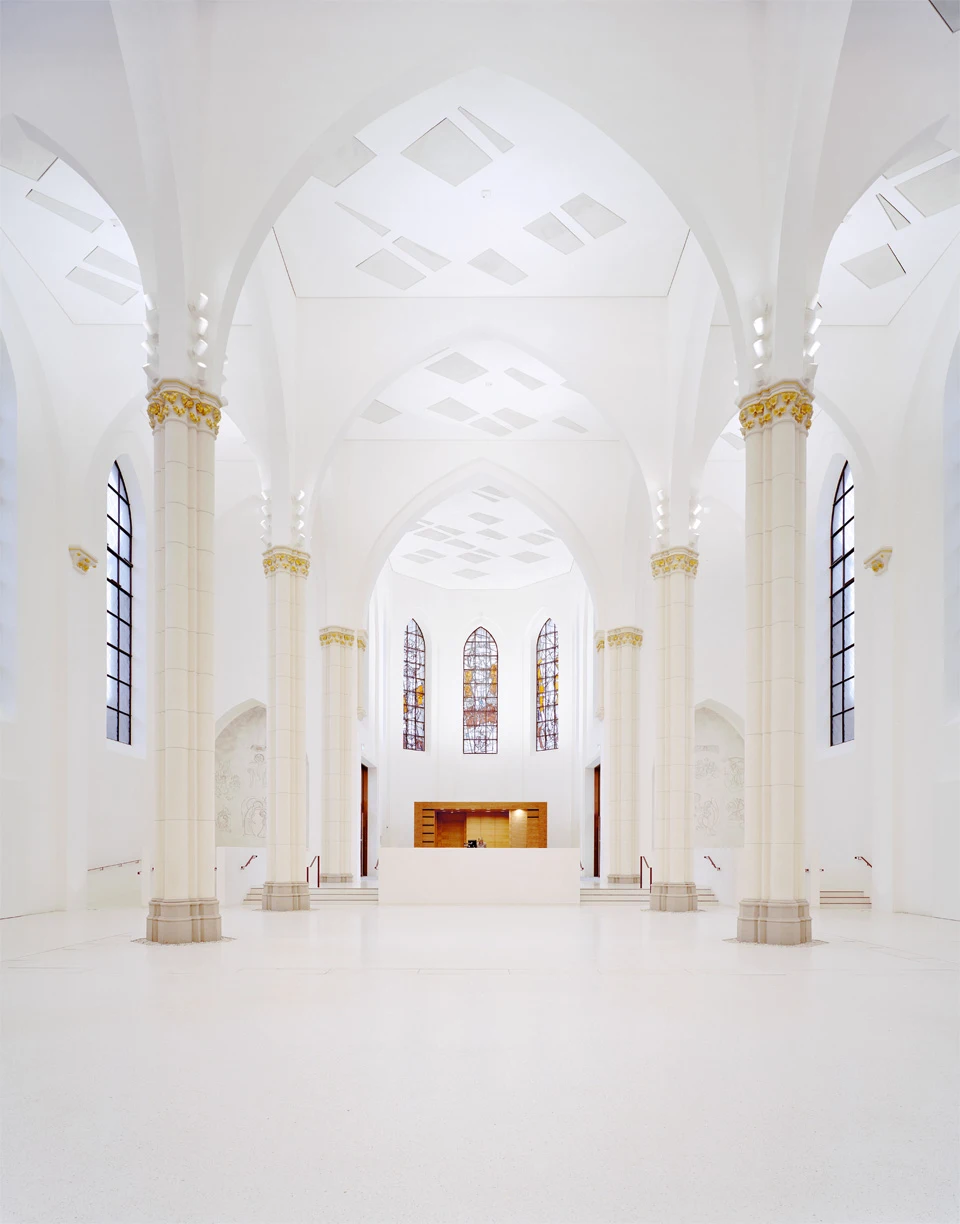
The former St. Mary’s Church (Bochum), a neo-Gothic church built between 1868–1872, has been skilfully converted into the Anneliese Brost Musikforum Ruhr, a major music and performance venue for the Bochumer Symphoniker. The project, designed by Bez+Kock Architekten, sees the church’s nave repurposed as the foyer linking two new concert halls (one ~1,000 seats, the other ~250) while preserving the historic fabric, stained-glass windows and architectural presence. The adaptive reuse has transformed a redundant sacred space into a thriving musical hub.
Santa Barbara, Llanera, Asturia
Type: Recreational
Use: Skatepark
Photo Credit: Okuda San Miguel website
The 1912 neo-Gothic Church of Santa Bárbara in Llanera, Asturias, Spain, was abandoned for decades before local skateboarders and artists stepped in to give it a radically new lease of life. Led by the collective “The Church Brigade” and with financial backing from crowdfunding and Red Bull, the oncenave became a skate park known as “Kaos Temple,” featuring a full half-pipe and dramatic interior art by street-artist Okuda San Miguel covering walls, ceilings and arches with vibrant geometric murals. The project retains the church’s monumental space and stained-glass light, while transforming it into a hub for recreation and culture.


St. Mary of the Angels , West Everton
Type: Recreational
Use: Recording and Rehearsal Space
Photo Credit: LiverpoolPhil
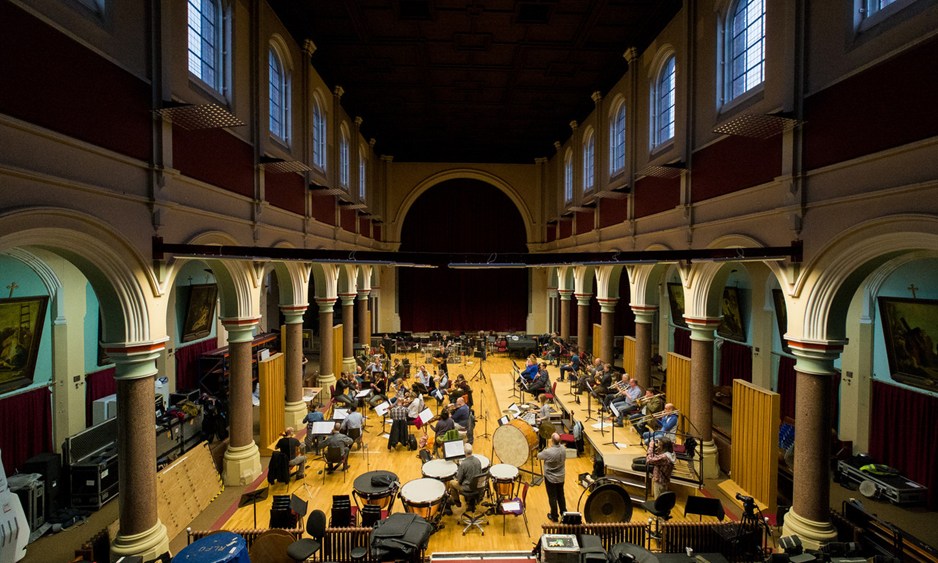
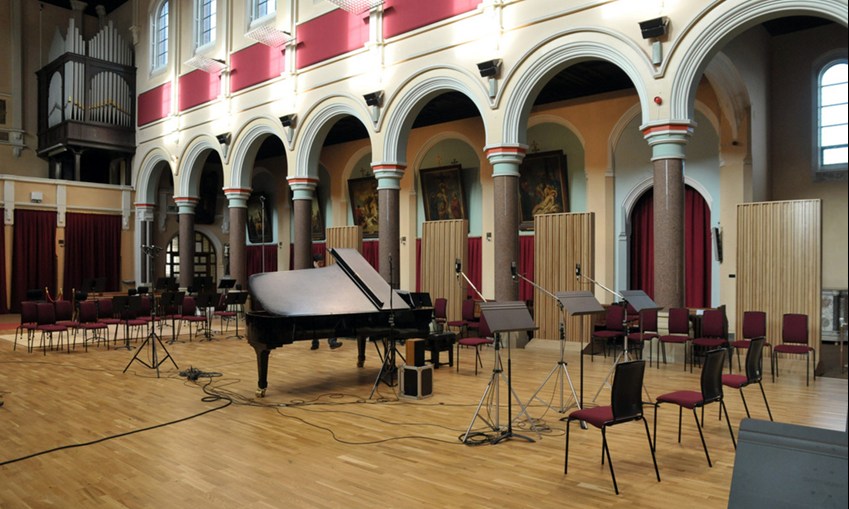
The former St Mary of the Angels Church in West Everton has been transformed into a state-of-the-art rehearsal and recording venue, now known as The Friary. Following a two-year refurbishment funded in part by the European Regional Development Fund, the nave was equipped with acoustic treatment, a raised wooden floor, and sophisticated lighting and sound systems. Today it serves the Royal Liverpool Philharmonic Orchestra, its Youth Orchestra and other ensembles, and is also available for hire with flexible breakout rooms, kitchens and associated amenities.
St Benedict’s Church, Ardwick
Type: Recreational
Use: Indoor Rock Climbing
Architects: Buttress Architects
Photo Credit: Buttress Website
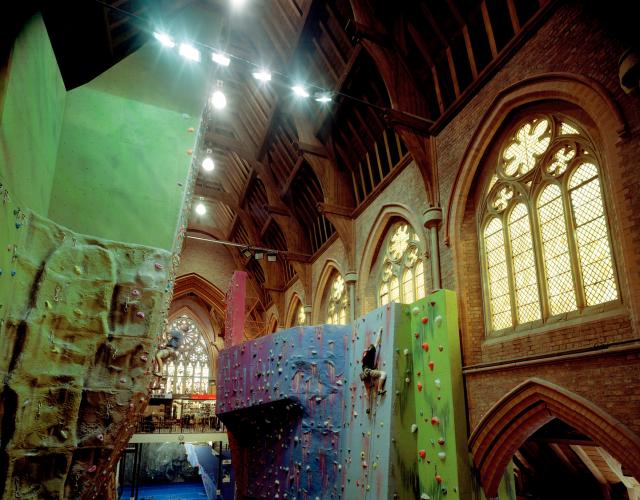
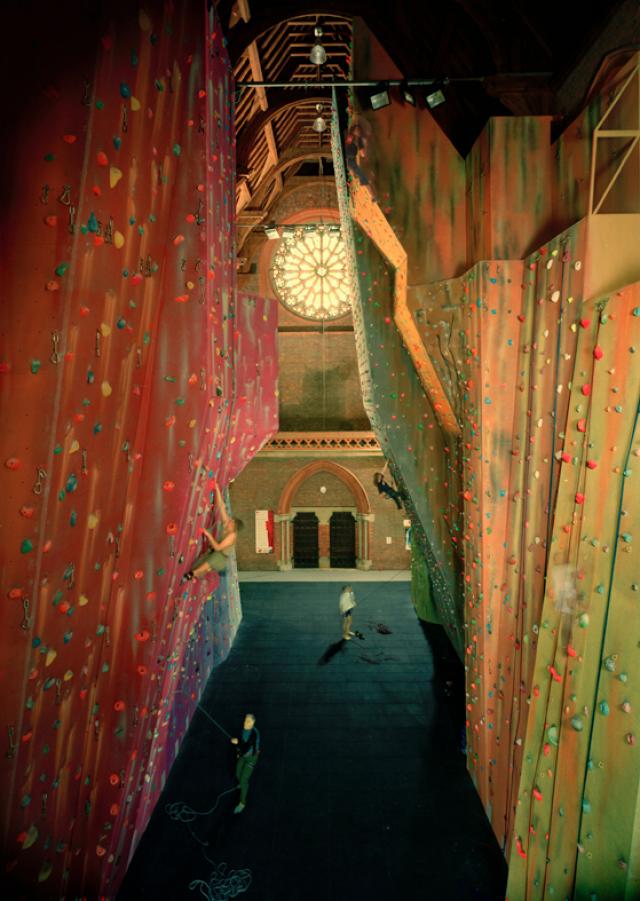
The Grade II*-listed former St Benedict’s Church in Ardwick, Manchester, was transformed into a large-scale indoor climbing facility, initially opening as the Manchester Climbing Centre in 2005. Under alterations by Buttress Fullmer Alsop Williams, steel-framed climbing walls were installed in the nave, a mezzanine was added in the chancel for a café, shop and “bouldering cave”, and services including toilets and community rooms were placed in the vestry and lady chapel. The conversion preserved the building’s dramatic nave volume and key architectural features, giving the redundant church a vibrant recreational new use.
Yr Hwylfan / The Fun Centre – Caernarfon, Wales
Type: Recreational
Use: Childrens Activities / Fun Centre
Architects: Unknown
Photo Credit: Yelp Fun Centre
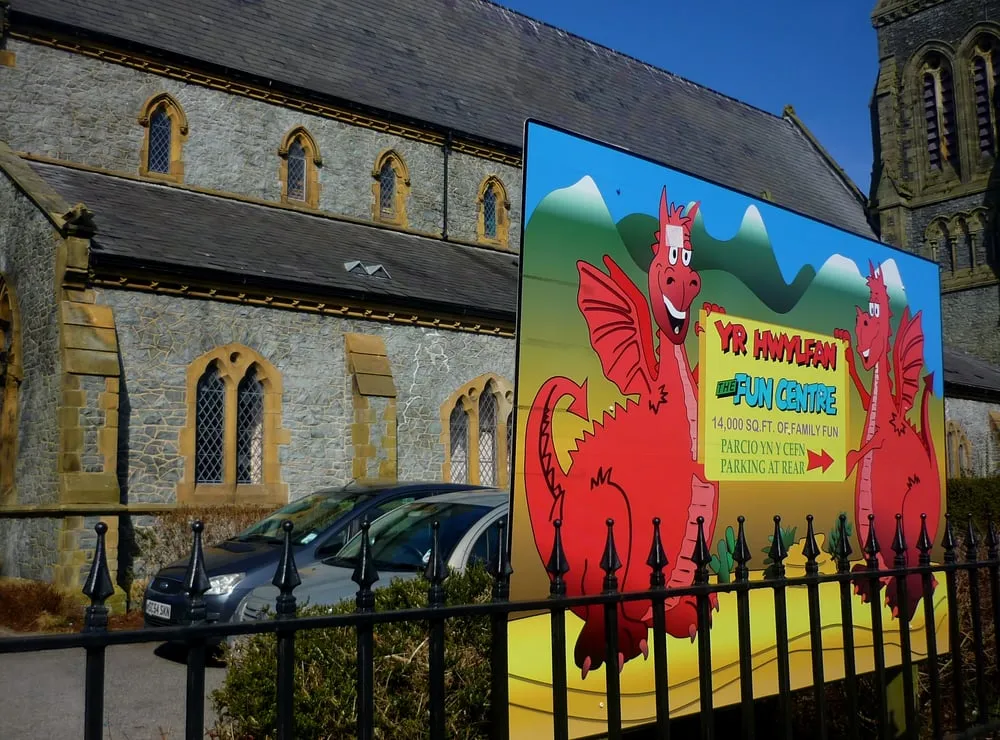
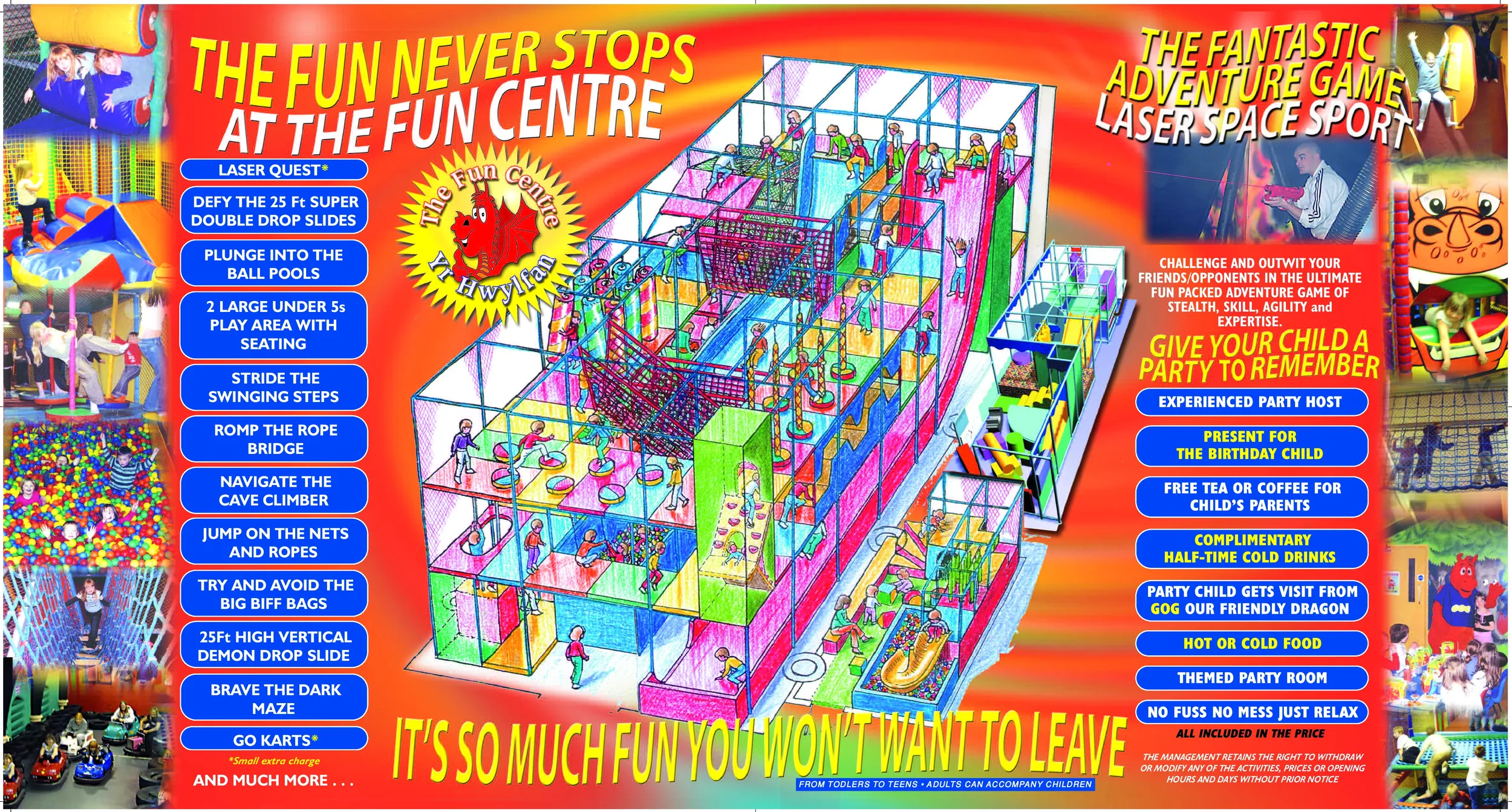
The former 19th-century Christ Church Wesleyan chapel in Caernarfon was transformed into Yr Hwylfan / The Fun Centre, one of the largest indoor play centres in North Wales. The adaptive reuse retained the dramatic height and structural form of the church interior, allowing the installation of multi-level play frames, giant slides, climbing areas, soft-play zones and a café within the original nave. By preserving the main architectural features while reimagining the building as a family-focused leisure venue, the conversion gave the redundant chapel a sustainable new purpose as a major recreational attraction.
Above Adventure – Former Grange Free Church, Kilmarnock
Type: Recreational
Use: Climbing Centre
Architects: John Gilbert Architects
Photo Credit: Above Adventure
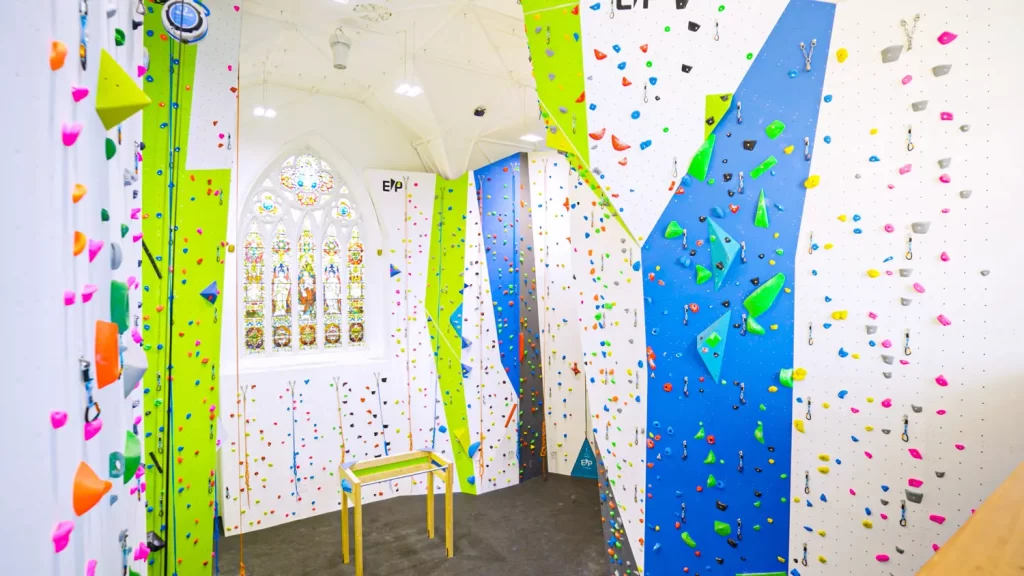
The former Grange Free Church in Kilmarnock has been brilliantly transformed into Above Adventure, a fully accessible indoor climbing and bouldering centre. The conversion was designed by John Gilbert Architects in collaboration with Narro Associates and Reid Associates, and delivered by contractor Emtec. The eight-year project culminated in 2023, turning the landmark building into a community hub with climbing walls, a café, sensory room, and changing facilities, while preserving key heritage features such as the stained-glass “Good Shepherd” window. Funding came from a mix of sources including the Scottish Government’s Regeneration Capital Grant Fund, Historic Environment Scotland, SportScotland, East Ayrshire Council, and the Architectural Heritage Fund (which provided development grants and loans).
Maniak Padoue – Saint Anthony of Padua Church, Brussels
Type: Recreational + Worship
Use: Climbing Centre & Worship
Architects: Emmanuel Ramirez-Mauroy and Julien Barattucci
Photo Credit: Maniak Padoue
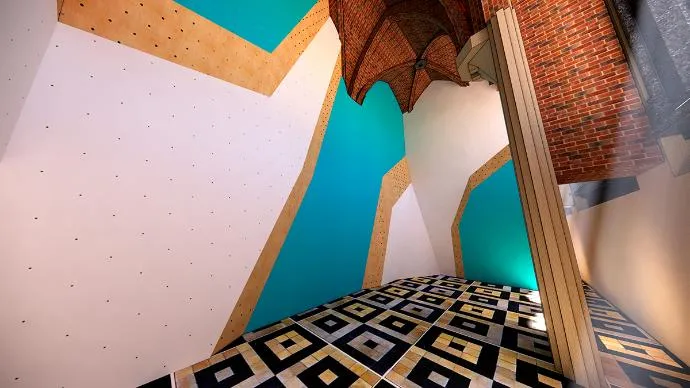
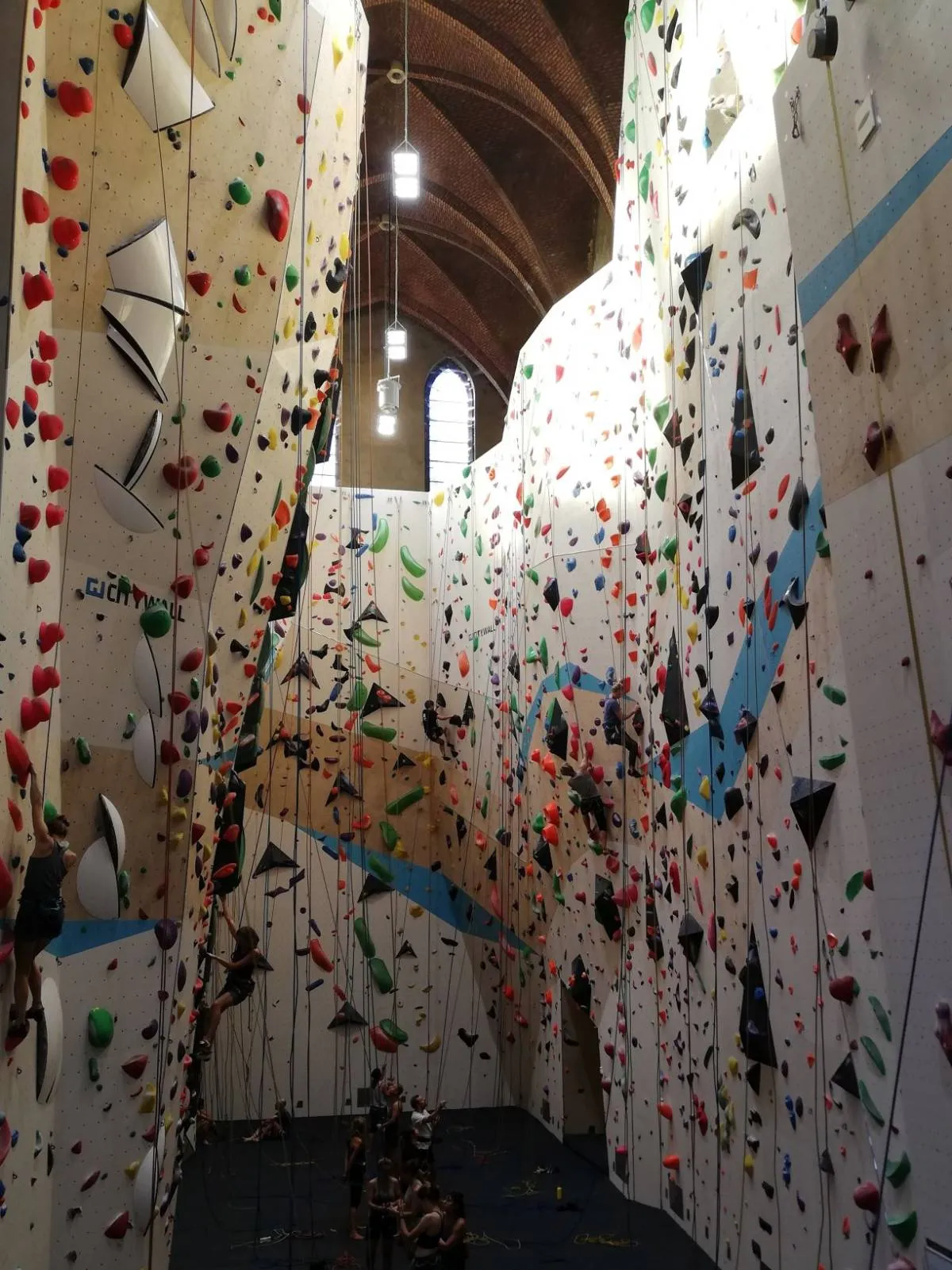
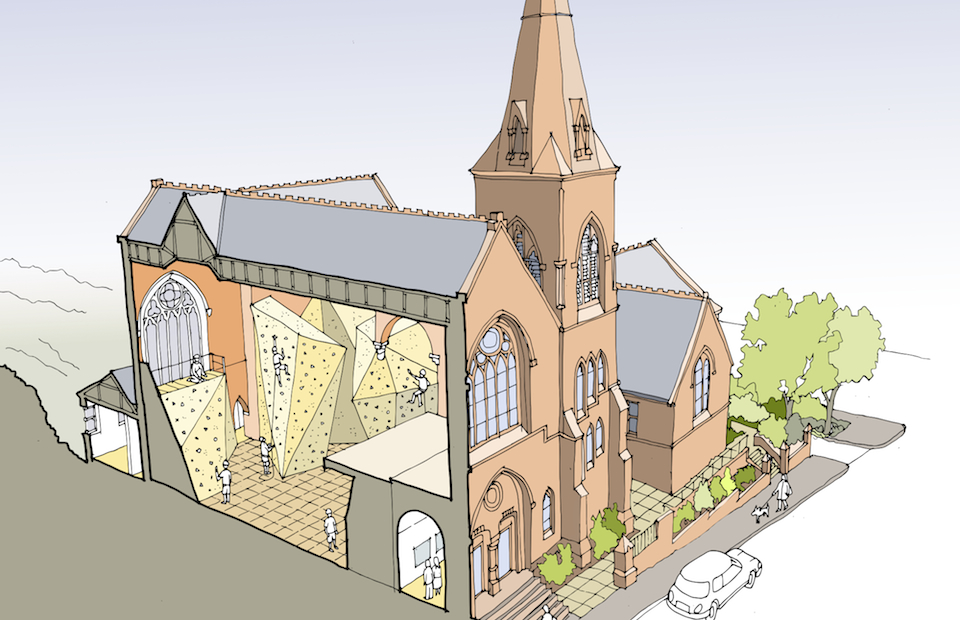
The neo-Gothic Saint Anthony of Padua Church (1905, by Edmond Serneels and Georges Cochaux) in Brussels has been creatively transformed into Maniak Padoue, a large indoor climbing centre. Under a 30-year agreement with the church authorities, the rear of the church was adapted for climbing while the front nave continues as an active worship space. Designed by architects Emmanuel Ramirez-Mauroy and Julien Barattucci, the 2023 conversion added 7,800 kg of structural steel, roof repairs, and over 1,400 m² of climbing surfaces rising to 18.5 m. The project introduced roped climbing, bouldering, speed walls and social areas beneath the preserved vaults and stained glass, giving the historic church a new recreational life alongside its religious function.